Margaret is the Head of Marketing at Elit-Web and a marketing strategist with 5+ years of experience in B2B and B2C digital marketing
Jewelry sells on visuals first, but the decision rarely comes there. Most buyers research extensively before committing to a high-value piece. Still, a carousel post or a short reel can spark the initial interest. Instagram holds over 52% of the fashion influencer market share, while TikTok Shop reached $15.82 billion in US sales. That shift means social media marketing for jewelry is no longer optional. It’s where discovery and trust-building often start, well before a shopper visits a website or a store.
The guide covers content ideas and platform strategies to drive results for your jewelry brand.
What Is Social Media Marketing for Jewelry Brands?
Social media marketing for jewelry involves using platforms such as Instagram, TikTok, and Facebook. The main aim is usually to build trust, visibility, and direct sales. The strategy should cover organic content (lifestyle shots, craftsmanship footage, user-generated content), paid ads, and influencer partnerships. Besides, you can use shopping features like Instagram Shop and TikTok Shop with synced product catalogs.
Because jewelry sets at a high price point, jewelry social media marketing leans on trust signals. It can be sourcing transparency, authentic customer reactions, and consistent posting. These steps keep a brand visible through a long consideration period.
Why Jewelry Brands Need a Social Media Strategy
A strong social presence does several jobs at once. For example, it differentiates a brand, showcases the product, and turns followers into a community and into customers. Let’s review each piece and what approaches they need.
Standing Out in a Competitive Jewelry Niche
The jewelry niche is crowded. So, beautiful product photos rarely cut through. Most fine jewelry buyers compare craftsmanship, provenance, and brand credibility.
A business competing purely on aesthetics loses out to one with a clear point of view, such as sustainability, a design philosophy, or a specific niche. That differentiation has to show up consistently across every post, not just in a one-off campaign.
Showcasing Craftsmanship & Style
Process content behind-the-scenes footage of sourcing, cutting, or setting a stone builds trust more than a finished product shot. That matters more here than in most categories, since buyers are paying for materials and skills they can’t verify online. A layered strategy combines studio photography for consistency, lifestyle shots for context, and process footage for credibility.
Building an Engaged Community
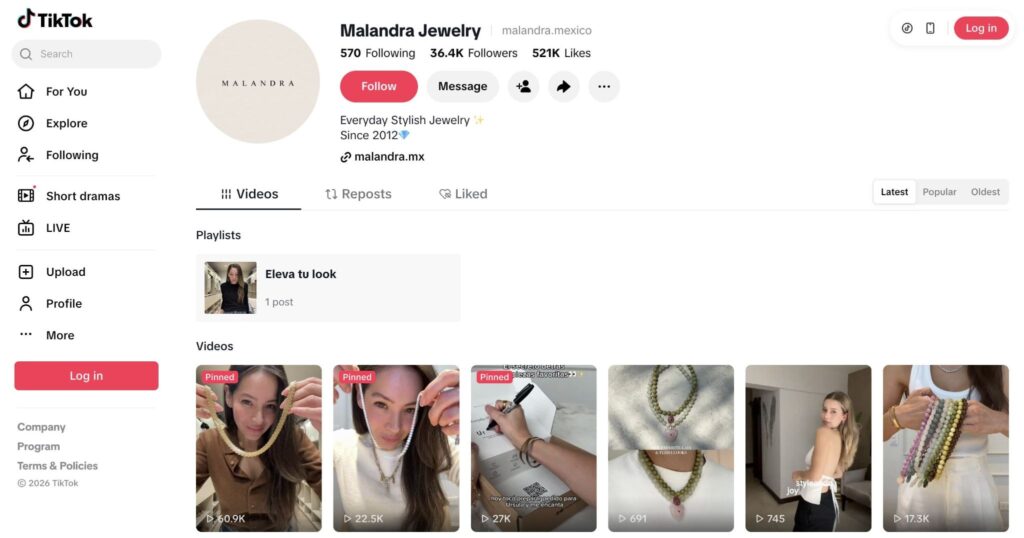
Shoppers who engage with UGC convert at a 161% higher rate than those who don’t. This explains why so many retailers build campaigns around customer photos instead of studio shoots alone. Premium jewelry brand Malandra did exactly this on TikTok Shop. Instead of glossy, staged photography, the brand built shoppable UGC galleries from real customers, letting shoppers see the jewelry on actual people. Repurposing that content into product pages, Pinterest boards, and paid ads further extends its value. Strong media marketing here treats followers as future advocates, rewarding shares and reviews just as purchases.
Social Media Content Ideas for Jewelry Brands
Four content types presented below show something different. The main ideas for jewelry content include the process of crafting, the customer’s emotions, the story of a brand and/or a piece, and the moment of life. Together, these types cover most of what a jewelry company needs to say without repeating the same angle.
Behind-the-Scenes Content
Behind-the-scenes footage humanizes a brand. Something that finished product shots can’t do. For instance, it can show the workbench, the sketches, and the hands doing the work.
VRAI extended its Met Gala presence this way. After the event, the brand used Instagram and TikTok to share storytelling and behind-the-scenes content about the ethical origins of its jewelry. The campaign generated €377K in Media Impact Value within 48 hours.
User-Generated Content (UGC)
Encourage customers to tag the brand or use a branded hashtag when they post photos wearing a piece, then ask permission before reposting. Real styling reads as more trustworthy than a studio shot, especially for a category where buyers hesitate over price. A simple incentive like a discount can help to get this content flowing.
Stella & Dot ran an affiliate-driven UGC campaign built around a $50 gift card giveaway. This encouraged influencers and customers to tag friends and share the brand’s message. The jewelry business obtained over 18,000 engagements in seven weeks.
Brand Story & Craftsmanship Content
This format works by slowing down instead of chasing a quick sale. A designer’s sketch, a stone being set, or a founder explaining a decision can build more trust. Since buyers are paying for materials and skills they can’t verify by touch, online.
This content also travels well across formats. A single behind-the-scenes shoot can become a Reel or a carousel, breaking down the process step by step. Tiffany & Co.’s latest High Jewelry campaign leaned into this. They spotlighted artisans mounting diamonds by hand and framing each piece around craft and legacy.
Product Launch Campaigns
A launch needs its own content arc. The teaser builds anticipation, the reveal, and then follow-up content showing the piece. Tying the timing to a cultural moment (a holiday or a seasonal event) gives the launch a built-in reason for people to pay attention.
Malaysian jewelry store Masdora did this with a Ramadan campaign built around TikTok Shop’s Video Shopping Ads. It generated 800,000 impressions, 75% of total GMV from TikTok Shop specifically, and a 39x return on ad spend.
Expert Insights
Margaret Nest
Head of Marketing at Elit-Web
With Instagram leading social shopping and TikTok Shop driving billions in sales, visual discovery is now the e-commerce standard. Jewelry brands must look beyond polished photos to highlight craftsmanship and customer UGC. For high-ticket items, an active social media presence isn’t optional — it’s essential for building the trust that drives conversions.
Building a Jewelry Social Media Content Strategy
Platform, influencer, and partnership decisions all shape a content strategy just as much as the content itself. Let’s review what actually goes into building one properly.
Choosing the Right Social Media Platforms
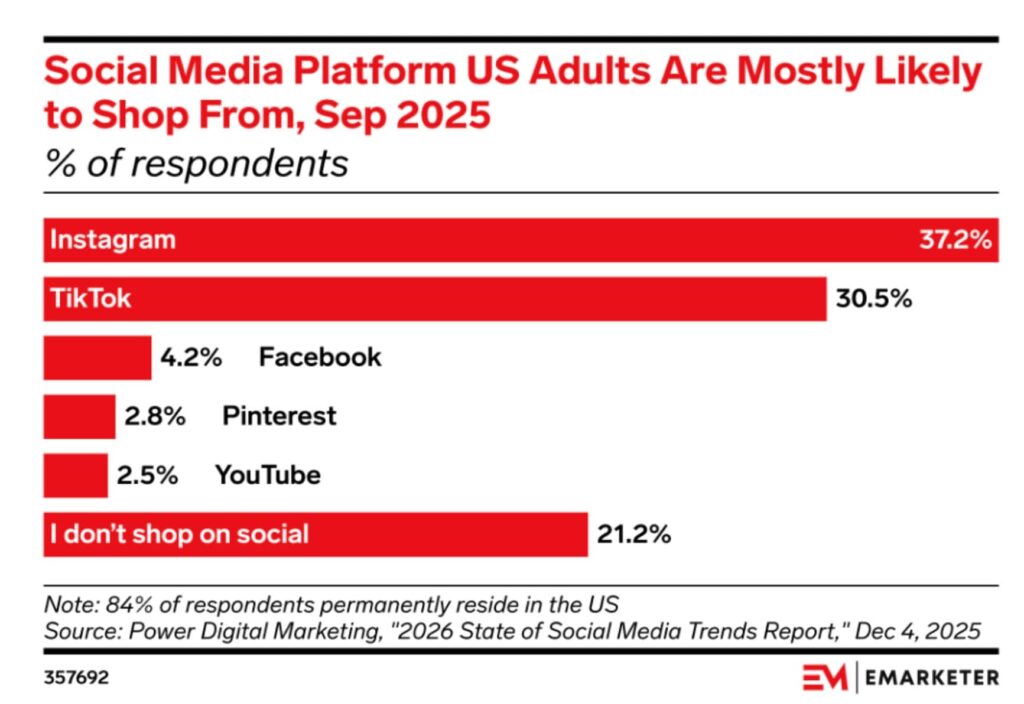
Not every platform needs equal budget or attention. As of 2025, 37.2% of US adults say Instagram is their preferred platform for social shopping. It is ahead of TikTok and Pinterest.
That said, platform choice should follow the audience.
For example, Phillips Jewels outperformed the luxury industry average on Instagram. It was achieved by pairing close-up product visuals with concise educational captions. The key takeaway is that the format should be suited to a platform’s behavior.
Working With Influencers
Micro-influencers, typically 5,000 to 100,000 followers, tend to outperform bigger names on engagement and conversion. This is especially true for the jewelry niche, since purchases are emotional and personal. Emerging label Ana Luisa built its growth engine around this. Influencer collaborations generated $22.9 million in Earned Media Value in just seven months, proving the approach scales beyond a single sponsored post here and there.
Collaborations With Other Brands
A well-matched brand partnership borrows attention from an entirely different audience. One example is the collaboration of Nike and Tiffany & Co. They merged streetwear with high-end jewelry in a limited-edition collection. That generated over 1.4 million likes on the announcement post alone and sold out shortly after launch, pulling Nike’s audience for a brand they might never have considered otherwise.
How to Run Successful Jewelry Social Media Campaigns
Retargeting ads recover 18% of abandoned carts for jewelry brands. That kind of lift only holds up when strategy, launch, and measurement work as one connected process. A campaign built without a clear goal is hard to launch effectively, and a launch without proper tracking is hard to learn from.
Defining Your Marketing Strategy for Jewelry
Start with one specific goal, not an unclear wish to sell more. Real marketing strategies for jewelry — pick a single objective. This can be brand awareness, list growth, or direct sales. So, your creatives should be based on that.
That choice also shapes which platforms to prioritize, what content to create, and which metrics matter for evaluating success. Trying to chase every goal at once in the same campaign usually means none of them get measured well. Thus, the strategy can end up unfocused by design.
Launching a Targeted Campaign
Omnichannel retargeting is where some jewelry social media campaigns see efficiency gains. Instead of showing the generic ad to everyone who visits a site, you can sync Google Display and Meta campaigns. Thus, your brand will show different facets of a piece over time. This approach lets the story unfold across multiple touchpoints instead of repeating one message on a loop. This sequencing matters more for higher-priced pieces, since buyers rarely convert on first exposure and need several reminders before committing.
Measuring Campaign Performance
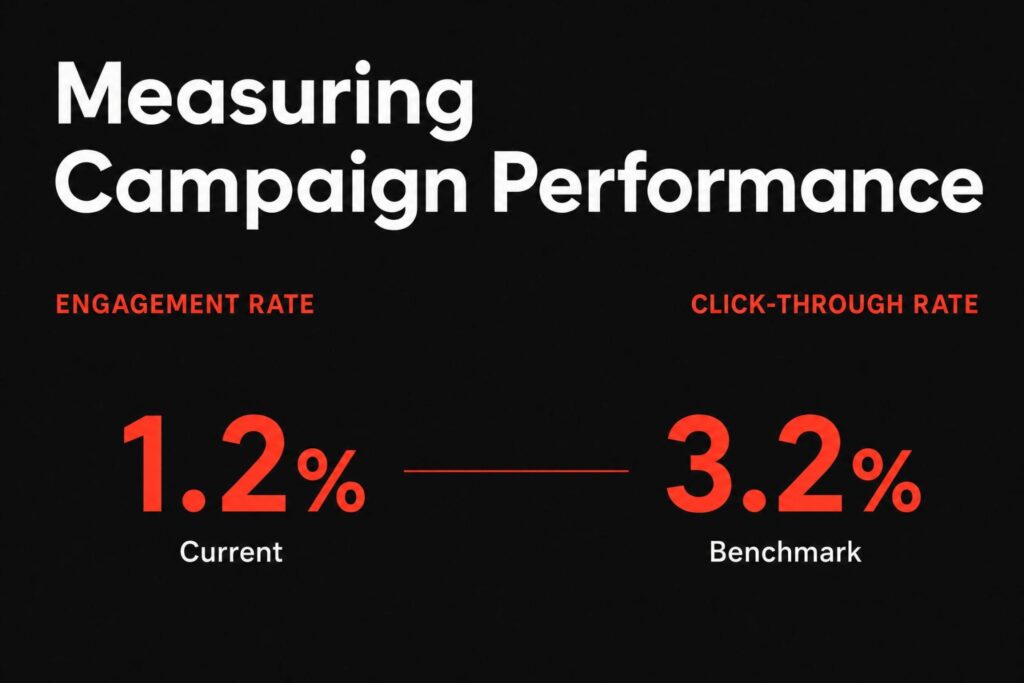
Here’s a handful of KPIs you can learn from. They’re engagement rate, reach, and click-through rate. Engagement rate covers likes, comments, and shares. Reach shows how many unique accounts saw the content. Click-through rate shows the share of viewers who clicked on an ad, while conversions require separate tracking. Context matters too for jewelry social media success. A 1.2% conversion rate seems fine until industry benchmarks show top performers hitting 3.2%. This means a campaign can look healthy in isolation while still underperforming against what’s actually possible.
Why Choose Our Social Media Agency
We’re a performance-driven digital marketing agency. Elit-Web’s services include SMM, PPC, GEO, SEO, CRO, and email/retention marketing.
Since 2014, we’ve completed 2,500+ projects and have become a Google Premier Partner and a Meta Business Partner. In addition, we hold top rankings in Clutch, DesignRush, and SemRush’s agency directories.
Discover Untapped Jewelry SMM Opportunities
Unlock hidden growth potential with a free, data-driven social media audit. We analyze your content performance, identify where you’re losing high-intent buyers, and map out an actionable strategy to scale your brand’s reach and sales.
Across our full portfolio, we’ve generated 3.5 million+ leads and an average client ROI above 200%. In jewelry specifically, one of our proofs is DiamondsFactory, a US-based online jewelry business. We ran a technical SEO audit, a competitor analysis, and built content around real purchase-intent searches. Their organic traffic grew 311%, from 8,500 to 35,000 monthly users, while monthly search visits grew 4.1x. Those are the kind of numbers that show up when a strategy matches how jewelry buyers search and compare.
Deep Understanding of the Jewelry Niche
Jewelry buyers shop by occasion — weddings, anniversaries, gifting. Those changes that platforms and content convert.
We saw this play out with Olive & Piper, a Vancouver-based jewelry brand. We rebuilt the strategy around occasion-based search intent. Over six months, organic traffic grew from 40,000 to 69,000 monthly visits, and product pages moved from the top 10 into the top few Google results.
That’s the difference niche understanding makes. Knowing that a jewelry buyer’s intent is tied to a life event and building the strategy around that, rather than generic e-commerce keywords.
Data-Driven, Measurable Results
Every strategy we run is tied to the numbers we report. Clients track progress on a shared analytics dashboard from day one, and we adjust the plan based on the data.
Across our SMM portfolio, we’ve generated 220% average ROI and are backed by a 5.0 rating across Clutch reviews. That discipline holds regardless of industry. We review performance data weekly to catch what’s working.
Final Words
Consistency and platform fit matter more than any single viral post. Social media marketing for jewelry works best when content, community, and paid strategies reinforce each other. Real metrics rather than vanity numbers should also back this. Start with one clear goal, and let the platform, format, and measurement follow from there.
FAQ
How often should a jewelry brand post on social media?
Most brands see solid results posting 3–5 times per week on core platforms like Instagram. In addition, they can post daily Stories or short-form videos to increase engagement. Consistency of jewelry social media activity matters more than volume. A predictable posting rhythm keeps a brand visible through jewelry’s typically long research and consideration period.
Which social media platforms work best for jewelry brands?
Instagram remains the top choice, with 37.2% of US adults naming it their preferred platform for social shopping. TikTok Shop is growing fastest for direct sales, while Pinterest works well for discovery.
How do I grow my jewelry brand’s social media following?
Jewelry social media marketing success compounds fastest through a mix of consistent content, UGC campaigns, and micro-influencer partnerships. Collaborations with adjacent brands can also introduce a brand to an entirely new audience overnight. An example is a cross-category partnership like Nike x Tiffany & Co.
Ready to turn social scrolling into real sales and revenue?
Elit-Web helps jewelry brands scale through data-driven SMM strategies focused on high-intent shoppers and measurable growth. We go beyond simple post views: we identify where you’re losing potential buyers, leverage high-converting UGC and craftsmanship stories, and build a targeted funnel to boost customer trust and order values.
Our approach is performance-driven: we focus on real outcomes, and our fee is directly tied to your results.
Margaret is the Head of Marketing at Elit-Web and a marketing strategist with over five years of experience in B2B and B2C digital marketing. She specializes in SEO, AI search optimization, content strategy, paid advertising, and social media growth. Her background includes developing and executing full-funnel marketing strategies for service-based and eCommerce brands in highly competitive markets. Margaret's main interests lie in performance-focused SEO, content frameworks, and scalable marketing systems that help brands grow visibility and conversions across channels.
Unlock Business Growth with Our Performance-Driven Approach
Don’t pay for marketing process. Pay for performance. Your investment is aligned with measurable performance and real business impact, not just completed tasks.
Ready to scale your brand with performance-driven marketing? Let Elit-Web turn your digital presence into a revenue engine! Get in touch with us today.
We optimize the site, create a personalized marketing experience and collect site usage data and analytics. By clicking "Accept", you agree to our use of cookies.