Margaret is the Head of Marketing at Elit-Web and a marketing strategist with 5+ years of experience in B2B and B2C digital marketing
Some crypto projects treat advertising like any other industry until their first campaign gets rejected within hours of launch. Google and Meta both restrict crypto promotion to certified exchanges, wallets, and coin trusts, with specific categories like ICOs and DeFi trading protocols banned outright. However, exact rules shift regularly and vary by product type and jurisdiction. Also, a single missed requirement gets a campaign disapproved before it runs at all.
This guide walks through exactly what different platforms allow, how certification works, and which networks skip that process. Let’s check it out.
What Is Crypto Advertising?
A crypto ad means promoting exchanges, wallets, tokens, and other products. Usually, companies use paid channels, like search ads, social platforms, display networks, or crypto-native ad networks. Unlike most industries, the crypto niche operates under a permission-first model. Major platforms like Google ban certain product categories outright and require certification for the rest.
Can You Run Crypto Ads on Google & Meta?
The short answer is yes. Still, it’s possible only within narrow lanes on both platforms. It runs separate certification processes, banned-category lists, and appeal workflows. Understanding these upfront saves weeks of wasted ad spend and a rejected launch.
Google permits advertising for certified exchanges, wallets, and coin trusts. Still, the platform bans ICOs, DeFi trading protocols, and crypto aggregators. Certification now runs directly through the Google advertising account, with agencies reporting review times of around 2-4 weeks once documentation like FinCEN or MiCA licensing is submitted. Google crypto certification also requires targeting only pre-approved countries — broad regional targeting like “Europe” gets flagged automatically.
Meta’s restrictions for Crypto Advertisers
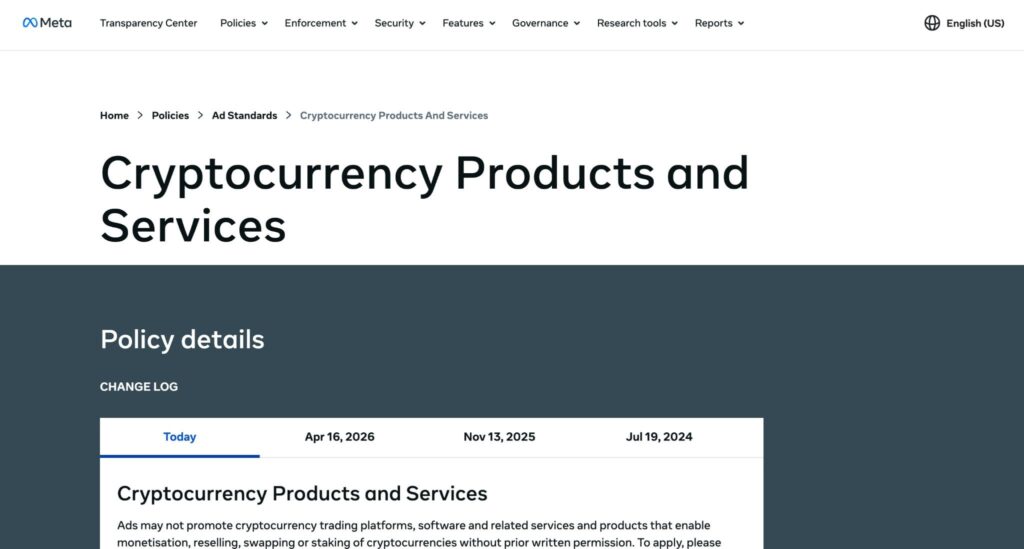
The platform requires a dedicated Crypto Ad Review, with regulatory licensing documentation and proof of custody insurance. Companies need to comply with that before any crypto banner ads or campaigns go live. Since Meta’s AI review engine rolled out in 2025, even certified advisers face fresh screening on every new creative asset.
The process runs faster than Google’s, often 7-10 days, but is more binary — approved or banned, with little room to negotiate in between.
What Happens If Your Ad Gets Rejected
Some ad disapprovals in the crypto business trace back to fixable issues, such as trigger words (staking, yield, returns) or a landing page that doesn’t match the certified claim. Both Google and Meta allow resubmission once the issue is fixed. According to HawtAds, around 70% of certification delays come from administrative mismatches.
So a compliance folder containing licenses and prior correspondence can speed things up. Attempting to bypass restrictions by showing reviewers different content than end users see (like redirecting to non-compliant destinations or dynamically switching page content) is treated by Google’s policy as cloaking. This leads to suspension upon detection, without prior warning, with accounts reinstated only in exceptional cases.
Expert Insights
Denis Tabachnik
COO at Elit-Web
Over 70% of crypto ad delays stem from compliance mismatches, and raw clicks no longer drive real growth. The strategy that actually works is running certified Google Search ads alongside crypto-native networks like Coinzilla to target verified wallet holders directly. Combining these channels with a focus on on-chain metrics is essential for bypassing regulatory friction and acquiring high-intent Web3 users.
Why Most Crypto Ad Campaigns Fail
Most failed crypto campaigns don’t die from one catastrophic mistake. The reason is three smaller ones, including a compliance slip that flags the account, an audience too broad to convert, and a creative that doesn’t hold attention long enough to matter.
Policy & Compliance Mistakes
The most common failure point is treating Google cryptocurrency advertising regulations as a one-time checkbox. But it should be treated as an ongoing requirement.
Certification status needs updating as laws shift per country. Campaigns that assume “certified once, get compliance forever” get flagged the moment a landing page mentions a banned term like staking or guaranteed returns. Ad disapprovals happen at roughly three times the rate of standard industries. Most of them trace back to this exact gap between certification and day-to-day content review.
Weak Audience Targeting
Treating every crypto audience segment the same is the second major failure point. DeFi users respond to smart contract audits and governance details, exchange users care about liquidity and security, and NFT collectors respond to community and visual identity.
Thus, a single generic message wastes most of the ad campaign’s budget on people who were never going to convert. An advertiser running one message for every segment usually sees a traffic spike without wallet connections to show for it.
Low-Quality Ad Creatives
Uninspiring creativity is the third failure point, and it compounds the first two. Even a well-targeted marketing campaign that complies with the regulations underperforms if the ad itself doesn’t earn a click. Crypto audiences specifically research before acting, so hype-driven creative promising guaranteed ROI converts worse than ads grounded in specifics. It can include audited contracts, real fee structures, and actual product screenshots. Good crypto marketing treats creative testing as continuous, not a one-time asset built before launch and never touched again.
Google’s Rules for Cryptocurrency Advertising
Google’s crypto policy works in layers. A list of flatly banned categories, a certification path for everything else, and country-by-country eligibility that changes independently of the product itself. Missing one layer gets a campaign rejected, even if the others are handled correctly.
Crypto Advertising Restrictions
Google bans promotion of ICOs, DeFi trading protocols, and any destination that aggregates or compares issuers of cryptocurrencies. This covers crypto advertising platforms built around trading signals, investment advice, or broker reviews. The policy applies to all ad formats and assets tied to the account, not just the specific ad that mentions crypto. So, a single non-compliant landing page across a blockchain-related account can trigger disapprovals or additional review.
Certification Requirements
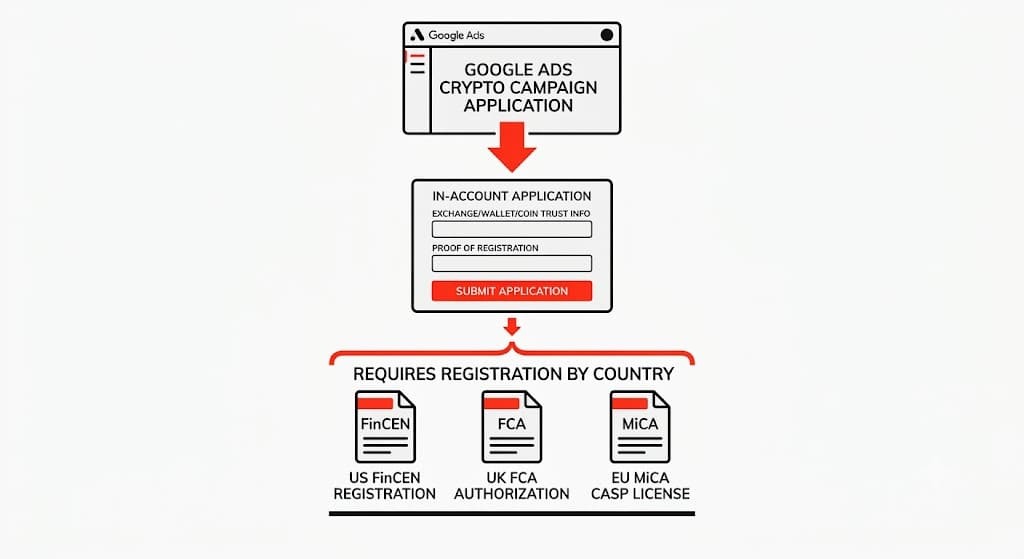
Exchanges, software and hardware wallets, and coin trusts need Google’s restricted financial products certification before any crypto Google Ads campaign can go live.
As of 2026, this application runs directly inside the Google advertising account rather than a separate help center form, and requires proof of registration. It varies by country — FinCEN in the US, FCA in the UK, or a MiCA CASP license in the EU. The review typically takes 2–4 weeks.
Staying Compliant Across Regions
Certification is granted per country, not globally, and the approved list changes over time. Currently, it covers markets like the US, UK, Japan, and Germany, among others.
Web3 projects targeting new markets need a fresh application before launching there, and broad regional targeting like “Europe” gets flagged automatically instead of being approved. Meeting the cryptocurrency advertising regulations means treating this as ongoing account maintenance, not a one-time setup step.
Discover Untapped Crypto PPC Opportunities
Unlock hidden growth potential with a free, data-driven crypto ad audit. We analyze your campaigns and compliance setup to stop wasted spend and give you a clear roadmap for scaling on-chain conversions.
Running ads in the crypto niche comes down to four decisions made in order. They are where to advertise, who exactly to target, how the campaign gets built, and how performance gets measured afterward. Skip a step, and the ones after it inherit the problem.
Choosing the Right Ad Platform
The certified Google advertising route reaches mainstream search intent that crypto-native networks can’t match. Still, those same networks like Coinzilla and Bitmedia skip the certification wait.
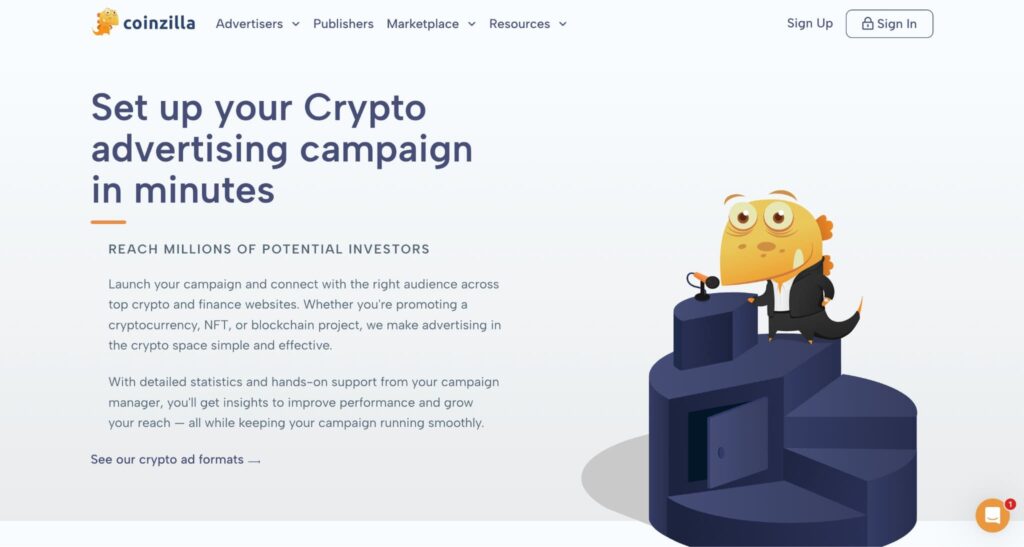
Coinzilla alone delivers over 1 billion monthly impressions across 2,000+ finance and crypto sites. The crypto ads platform built specifically for this niche also supports wallet-based targeting that standard advertisers can’t replicate through mainstream channels alone. Most serious campaigns run both tracks in parallel rather than picking just one.
Segment before writing a single ad. Exchange users care about liquidity and security, DeFi users respond to audits and governance details, and NFT collectors care more about community and identity. A single campaign message across all three groups wastes spend on people who were never the right fit for that specific product.
Setting Up Self-Serve Ad Campaigns
Coinzilla’s self-serve dashboard is a fast comparison point. It includes signing up, selecting advertisers, completing KYC verification, and building display, native, or pop-under campaigns from templates in minutes rather than weeks. This same self-serve model exists across most dedicated ad crypto networks, and none require the certification wait that Google and Meta impose. Fund the account, set a CPM or CPC budget, and the campaign can go live the same day.
Tracking ROI & Optimizing Performance
Standard metrics like CTR and CPM tell only part of the story. But the number that matters is wallet connects or on-chain conversions per dollar spent, not raw clicks. Crypto-native networks increasingly offer this natively. Some now track clicks through to actual blockchain events like token swaps and NFT mints, giving a real cost-per-onchain-action instead of cost-per-click alone. Reviewing this weekly catches underperforming ads and crypto placements before they burn through a meaningful chunk of budget.
Best Advertising Networks & Platforms for Crypto
For advertising for crypto projects outside Google and Meta’s certification maze, these networks specialize in the niche:
Coinzilla — 1B+ monthly impressions across 2,000+ crypto and finance sites.
Bitmedia — 5,000+ publisher network, CPM/CPC, and programmatic bidding.
A-ADS — self-serve since 2011, crypto-only payments, no KYC friction.
Cointraffic — CPM/CPC formats with dedicated crypto reporting dashboards.
Blockchain-Ads — wallet-based targeting for ads cryptocurrency campaigns tied to on-chain behavior.
Mintfunnel — tracks clicks through to token swaps and NFT mints for real return per on-chain action.
Running a mix of these ads on crypto networks tends to outperform betting everything on one, since Web3 audiences rarely concentrate on just one platform.
Alternatives to Google Ads for Crypto Advertising
Beyond dedicated ad networks, several channels sidestep Google’s certification maze entirely:
Sponsored content & PR — placements on Cointelegraph, CoinDesk, and Decrypt reach crypto-native readers without any account-level certification risk.
KOL and influencer marketing — locked-in contracts with crypto YouTubers and X accounts, with FTC/SEC-approvals disclosure built in from the start.
Reddit ads — crypto subreddits allow paid promotion with far looser restrictions than Google or Meta, though community backlash to obvious ads runs high.
Telegram & Discord growth — not paid ads in the traditional sense, but often the highest-converting channel for crypto marketing, since these communities self-select for interest already.
Programmatic crypto networks (PropellerAds, Coin.Network) — audience-optimized display campaigns, similar to Coinzilla but with different inventory.
Running two or three of these in parallel tends to outperform relying on any single certified channel alone, since each reaches a different part of the funnel.
FAQ
Does Google Ads allow crypto advertising?
Yes, but only for certified crypto exchanges, wallets, and coin trusts. Google’s policy is specific about what’s banned — initial coin offerings, DeFi trading protocols, and destinations that aggregate or compare crypto issuers. Certification is also approved per country rather than globally, so eligibility depends on both the product type and the target market.
How to run crypto ads on Google?
Apply for Google’s restricted financial products certification directly through the Ads account, submit licensing proof like FinCEN or MiCA registration, and target only pre-approved countries. Once certified, crypto ads can run within Google’s standard search and display formats.
What is the best ad platform for crypto?
There isn’t one universal answer — it depends on the goal. For mainstream reach, Google crypto certification wins on scale, while crypto-native networks like Coinzilla or Bitmedia often deliver better cost-per-conversion for niche, wallet-holding audiences.
Ready to scale your crypto campaigns without account suspensions or wasted spend?
Elit-Web helps crypto and Web3 brands scale through performance-driven PPC strategies focused on high-intent traffic and compliant growth. We go beyond basic clicks: we resolve regulatory friction across Google and Meta, target verified wallet holders, and optimize your funnel to increase real on-chain conversions.
Our approach is performance-driven: we focus on real outcomes, and our fee is directly tied to your results.
Margaret is the Head of Marketing at Elit-Web and a marketing strategist with over five years of experience in B2B and B2C digital marketing. She specializes in SEO, AI search optimization, content strategy, paid advertising, and social media growth. Her background includes developing and executing full-funnel marketing strategies for service-based and eCommerce brands in highly competitive markets. Margaret's main interests lie in performance-focused SEO, content frameworks, and scalable marketing systems that help brands grow visibility and conversions across channels.
Unlock Business Growth with Our Performance-Driven Approach
Don’t pay for marketing process. Pay for performance. Your investment is aligned with measurable performance and real business impact, not just completed tasks.
Ready to scale your brand with performance-driven marketing? Let Elit-Web turn your digital presence into a revenue engine! Get in touch with us today.
We optimize the site, create a personalized marketing experience and collect site usage data and analytics. By clicking "Accept", you agree to our use of cookies.