Margaret is the Head of Marketing at Elit-Web and a marketing strategist with 5+ years of experience in B2B and B2C digital marketing
AI is changing how people find information. Instead of scrolling through links, many users now get a direct answer from Google’s AI Overviews, ChatGPT, or Perplexity. As a result, content focused only on traditional rankings may miss opportunities to appear in AI-generated answers. AI content optimization bridges that gap, keeping visibility across both. It combines clear structure, credible sourcing, and the right tools to make content easier to find, extract, and cite. Below, we walk through what it means, why it matters, how to put it into practice, and which tools can help along the way.
What is AI Content Optimization?
When you use AI for content optimization, it covers two connected practices. First, it means adapting the content’s structure, relevance, and authority. As a result, AI systems like ChatGPT, Perplexity, and Google’s AI Overviews are more likely to cite it. Second, it may involve using AI tools to audit content, refine structure, and match search intent. Both approaches extend traditional SEO by layering structure and citability signals.
Benefits of AI Content Optimization
AI content optimization delivers advantages across three connected areas. How easily people find your content, how well it resonates once they get there, and how it performs in rankings. Each benefit reinforces the others.
Improved Visibility in AI Search Results
A growing share of queries now gets answered inside AI Overviews, chatbot responses, and generative AI platforms. Often, it happens without a single click reaching a search results page. Clear, well-sourced сontent that’s easy to extract stands a far better chance of being selected. This keeps a brand visible even as people use AI platforms alongside conventional search, not instead of it.
Expert Insights
Ihor Volovoy
CEO & Co-founder at Elit-Web
Adding expert citations boosts AI search visibility by 40%, while 70% of Google AI Overviews cite pages using a question in H2 and a direct summary. To win in AI search, replace long intros with structured, bite-sized answers and FAQ schemas. With traditional search expected to drop 25%, Generative Engine Optimization is vital to keep your brand visible and driving traffic.
More Relevant Content for Your Audience
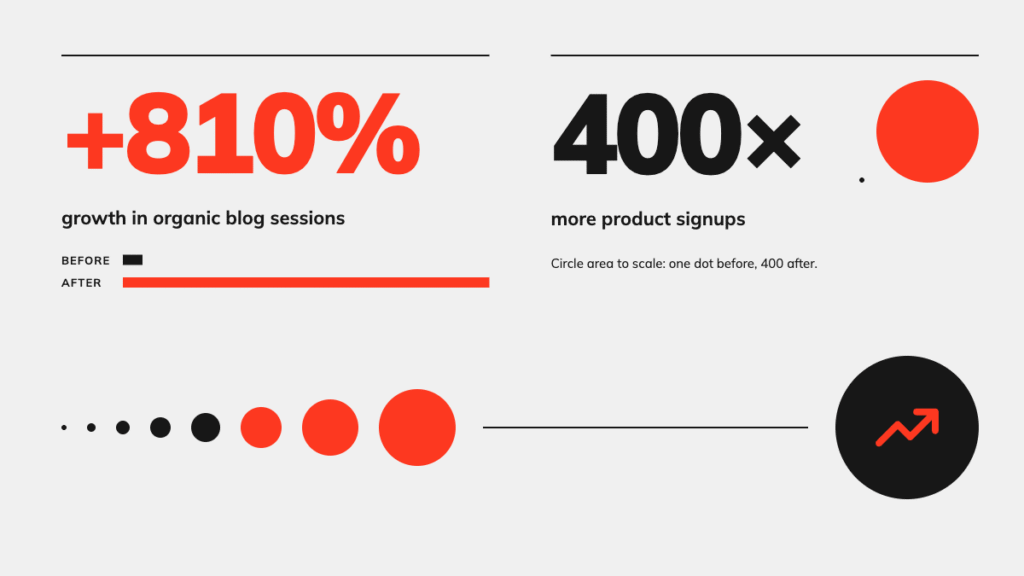
AI website optimization tools analyze readability, search trends, sentiment, and structure, surfacing gaps a manual review may miss. Brands that use AI can tailor content to specific audience segments with greater precision. This helps align content with search intent, or what users actually want to know. Omniscient Digital company grew organic blog sessions by 810% and increased product signups 400x after applying AI-driven optimization and topic targeting.
Stronger SEO and Search Engine Optimization Results
AI tools don’t replace search engine optimization fundamentals. They accelerate them. Keyword research, content gap analysis, and structural suggestions happen faster. This lets a team optimize content across far more pages than manual review alone. That efficiency compounds over time. Consistent, data-backed content marketing tends to outperform unoptimized publishing in both traditional rankings and AI citations.
How to Optimize Content for AI Search
Getting cited by AI search engines takes more than good writing. It requires understanding how these systems find, parse, and select sources. Then, it needs to structure content around that process.
Understanding Generative Engine Optimization
Generative Engine Optimization (GEO) expands traditional SEO to focus on answer inclusion. Princeton research found that adding expert quotations and authoritative citations can boost content for AI visibility by 40%. Getting AI for content optimization right means treating structure, verifiability, and contextual clarity as ranking factors.
Structuring Content to Appear in AI Answers
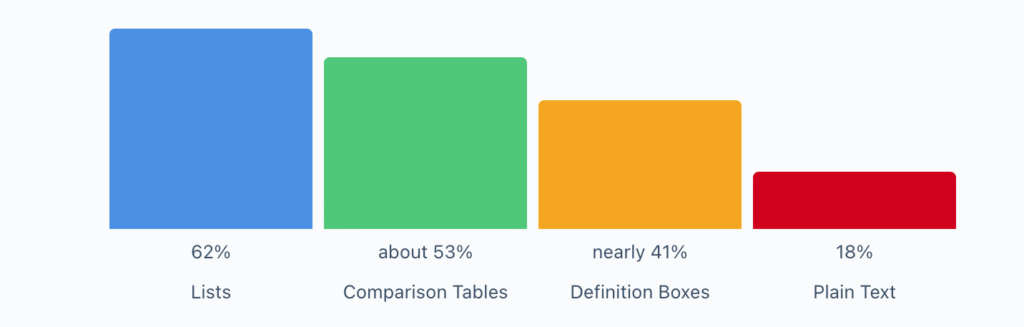
Seven of ten pages appearing in AI Overviews use a question-based H2 within the first 200 words. It should be followed by a direct 50-70-word answer. That summary-first structure matters more than length. Content Google can extract as a self-contained block, list, or comparison table outperforms long narrative paragraphs. The FAQ schema can support this as well. Question-and-answer pairs help AI systems interpret content, but they don’t guarantee citations.
Combining Traditional SEO With AI Content Optimization
AI optimization doesn’t replace SEO optimization fundamentals. A solid content strategy still needs keyword research, technical health, and backlinks. AI systems often favor pages that already rank well and demonstrate established authority. Pairing this foundation with a dedicated AI tool for structure and citability analysis matters. It closes the gap between traditional rankings and AI-generated answers.
Best AI Content Optimization Tools
The right tool depends on the goal. Some focus on writing, others on sourcing content against competitors. A growing set now tracks visibility inside AI-generated answers.
AI Writing & Optimization Tools
These AI content optimization tools combine drafting and SEO scoring in one workflow. Otherwise, teams often handle content generation and optimization separately.
Common options include:
Jasper AI — marketing copy and brand voice, often paired with Surfer for SEO suggestions;
Surfer AI — real-time content scoring alongside AI-assisted drafting;
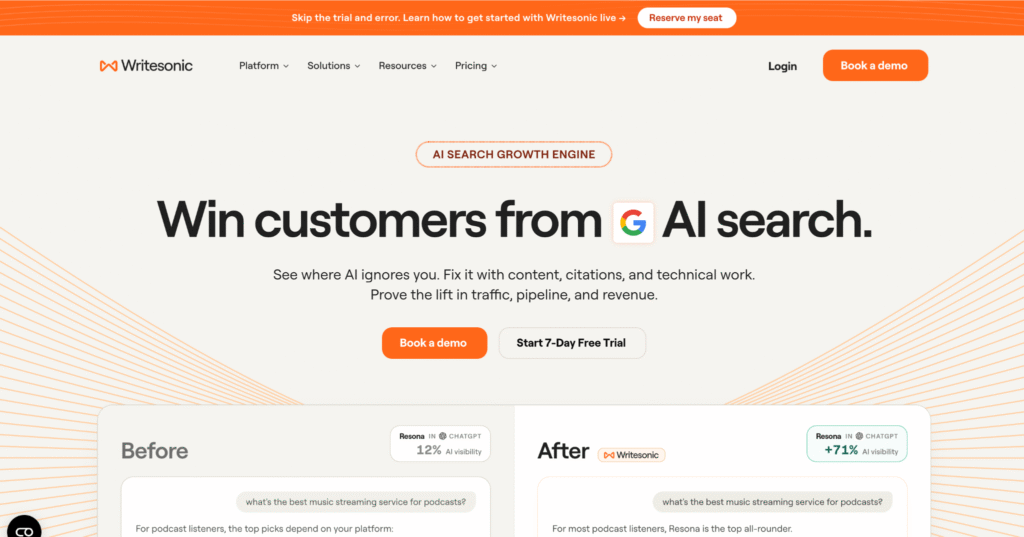
Writesonic — fast draft generation with built-in optimization features.
Using one of these tools keeps drafting and optimization in a single process. It saves time and reduces back-and-forth between separate apps.
Content Optimization Platforms
These platforms score existing content against top-ranking competitors. They use NLP analysis, rather than generating drafts from scratch.
Common options to optimize content include:
Surfer SEO — live content scoring while writing, suited to frequent publishing;
Clearscope — letter-grade scoring system, built for larger content teams;
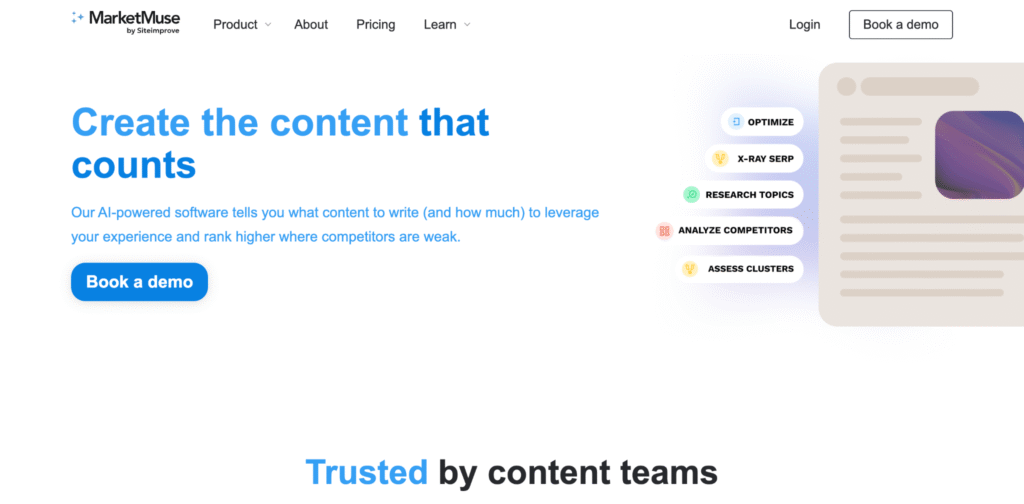
MarketMuse — topical authority planning and content gap analysis across a full site.
The right choice depends on team size and workflow. Surfer fits frequent publishing, Clearscope suits larger teams, and MarketMuse works best for site-wide planning.
SEO Content Tools With AI Features
These tools extend beyond traditional search engine optimization. They track visibility inside AI-generated answers alongside standard rankings.
Common options include:
Frase — content briefs, AI writing, and citation tracking across ChatGPT and Perplexity;
HubSpot AEO — AI visibility optimization paired with content recommendations;
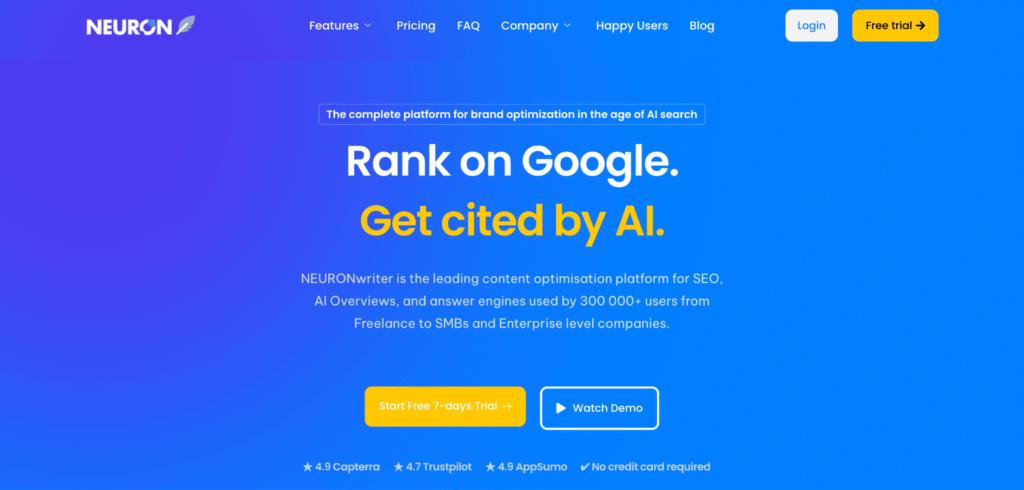
NEURONwriter — budget-friendly semantic SEO scoring with AI-assisted briefs.
Together, these options let teams monitor traditional rankings and AI citations from one place.
Emerging Trends in AI Content Optimization
Two shifts define where this space is headed. How content gets produced, and how strategy adapts to search that no longer centers on a results page at all.
Discover Untapped AI Search Opportunities
Using our AI Optimization Checklist, we analyze your technical setup, structured data, and content readiness across ChatGPT and Google AI Overviews. You’ll get clear, actionable steps to boost AI visibility, citations, and leads.
Generative AI now handles deep research and full article drafts from a single keyword. It pushes teams toward what’s being called “full-stack” content creation. This doesn’t replace human involvement entirely. Human-in-the-loop workflows are becoming standard, ensuring accuracy, proper sourcing, and brand voice before anything goes live. Nearly half of organizations are now actively optimizing content specifically for AI-powered discovery tools.
Content Strategy for AI-Driven Search
Gartner predicts traditional search volume will drop 25% by 2026 as AI-driven discovery takes over a growing share of queries. That shift is reshaping what content optimization AI tools require. 41% of content experts now list managing brand reputation in AI search as their primary content goal. Success increasingly means ensuring content is discoverable in traditional results. At the same time, simultaneously structured and credible enough to get cited in AI-generated answers.
Final Words
AI visibility and traditional rankings work best together, not as two separate goals. Focus on clear structure, optimize your content, publish consistently, and adjust your approach. These steps help keep your content relevant as AI platforms change and select sources. The brands that adapt early tend to build an advantage that’s harder to close later. Start with one high-value page, apply these steps, and measure the results before scaling the approach.
FAQ
How do I use AI for content optimization?
Start by auditing existing content for structure, clarity, and citability. Then use AI to identify gaps, refine headings, and restructure key information. It’ll be easier for readers and AI systems to extract and summarize.
What is the difference between SEO content and AI-optimized content?
Traditional SEO content targets keywords and ranking position within search results. AI-optimized content adds another layer on top. It focuses on clear structure, credible sourcing, and concise answers.
What are the best AI content optimization tools?
It depends on the task. Jasper suits brand-voice writing, Surfer SEO and Clearscope handle NLP-driven scoring, MarketMuse focuses on topical strategy, and Frase adds AI-citation tracking across platforms like ChatGPT and Perplexity.
Ready to adapt your brand for AI search before traditional search traffic disappears?
Elit-Web helps businesses dominate both Google and generative platforms like ChatGPT, Perplexity, and AI Overviews. We go beyond traditional rankings: we eliminate content extraction gaps, optimize for Generative Engine Optimization (GEO), and build authoritative citation networks that turn AI-driven searchers into high-intent leads.
Our approach is performance-driven — we focus on real revenue growth, and our success is tied to your results.
Get your custom AI Optimization strategy today and capture untapped search opportunities.
Margaret is the Head of Marketing at Elit-Web and a marketing strategist with over five years of experience in B2B and B2C digital marketing. She specializes in SEO, AI search optimization, content strategy, paid advertising, and social media growth. Her background includes developing and executing full-funnel marketing strategies for service-based and eCommerce brands in highly competitive markets. Margaret's main interests lie in performance-focused SEO, content frameworks, and scalable marketing systems that help brands grow visibility and conversions across channels.
Unlock Business Growth with Our Performance-Driven Approach
Don’t pay for marketing process. Pay for performance. Your investment is aligned with measurable performance and real business impact, not just completed tasks.
Ready to scale your brand with performance-driven marketing? Let Elit-Web turn your digital presence into a revenue engine! Get in touch with us today.
We optimize the site, create a personalized marketing experience and collect site usage data and analytics. By clicking "Accept", you agree to our use of cookies.